30 Jul 2026
Loyalty Webs in Modern Gaming: Connecting Slot Reels, Dealer Tables, and Live Events Through Payments and Tiers
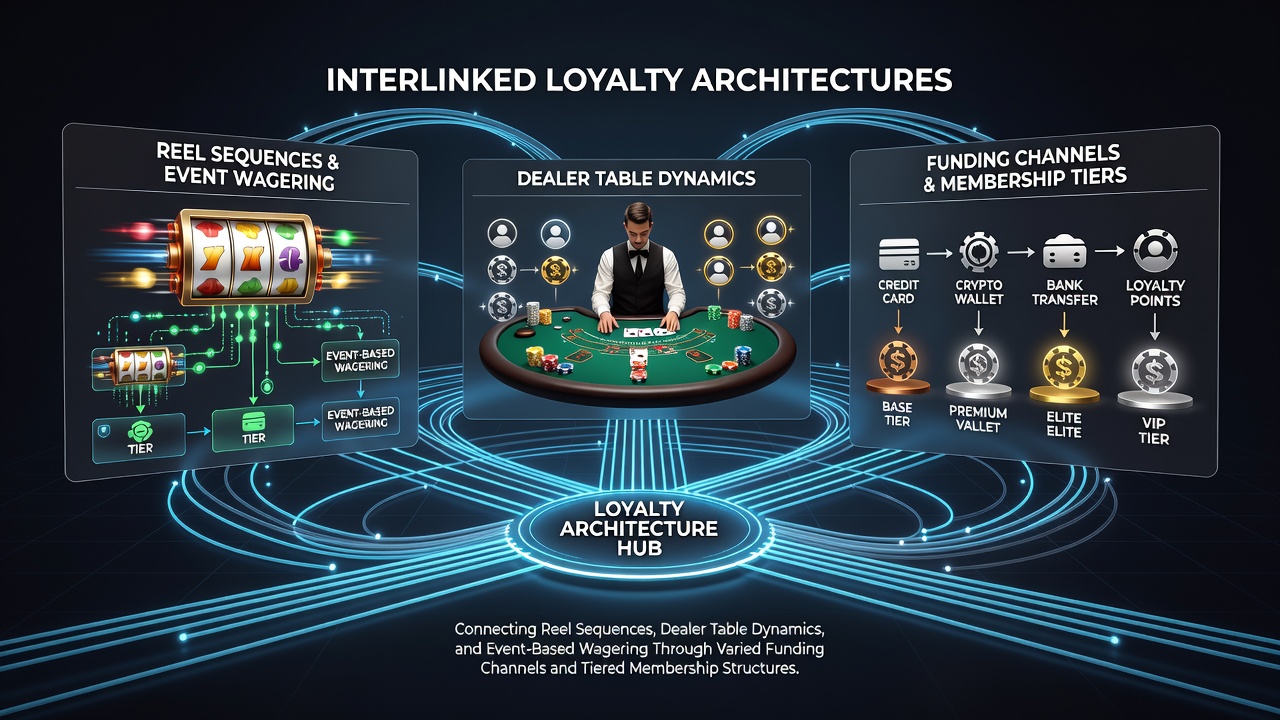
Interlinked loyalty architectures combine slot reel sequences, dealer table dynamics, and event-based wagering into single reward frameworks that operate across varied funding channels and tiered membership structures. These systems track player activity in real time and allocate points or credits that apply uniformly whether someone spins reels, joins live tables, or places bets on scheduled events. Data from multiple operators shows that unified tracking reduces fragmentation and allows seamless movement between game types without resetting progress or losing accumulated benefits.
Core Components of Unified Reward Tracking
Reel sequences generate points based on spin volume and bet size while dealer table dynamics contribute through hand frequency and table minimums. Event-based wagering adds layers by tying rewards to specific outcomes in sports or timed competitions. Observers note that the architecture merges these inputs into one ledger so that activity in any category advances the same membership tier. Funding channels such as bank transfers, e-wallets, and prepaid cards feed directly into the system and trigger instant point credits once deposits clear. Tiered structures range from entry-level access to premium levels that unlock higher redemption rates and exclusive table seating.
Payment Integration and Tier Progression
Varied funding channels connect to loyalty ledgers through APIs that verify transactions within seconds. A player depositing via digital wallet receives immediate credit toward tier advancement while the same amount wagered on reels or tables adds proportionally to the shared balance. Research from the Nevada Gaming Control Board indicates that operators using multi-channel funding see average session lengths increase when points carry across game categories without interruption. Tier progression follows cumulative thresholds that reset on fixed cycles yet retain partial carryover for active members. Higher tiers grant multipliers on points earned from dealer tables and event wagers alike so that a single deposit can accelerate movement through multiple levels simultaneously.
Cross-Game Point Allocation Mechanics
Point allocation follows formulas that weigh reel spin value against table hand duration adn event bet odds. A 100-credit wager on slots yields a base point amount while equivalent value at a dealer table adjusts for pace of play and side bet participation. Event-based wagering receives separate weighting that factors in timing and outcome probability yet still feeds the same membership ledger. Those who have examined operator reports find that this weighting prevents any single category from dominating tier advancement and maintains balance across reel sequences, live tables, and scheduled events. Funding channels influence allocation speed because instant deposits allow immediate point posting whereas slower methods delay credit until verification completes.

July 2026 System Updates and Data Trends
In July 2026 several platforms introduced updated loyalty engines that further tightened connections between funding channels and tier benefits. Figures from industry monitoring services reveal that cross-category point transfers rose by measurable margins after these updates took effect. Membership structures now include interim checkpoints that award partial tier benefits before full thresholds are reached which encourages continued activity across reels, tables, and events. External data from the Canadian Gaming Association shows similar patterns in jurisdictions where operators adopted unified architectures earlier in the decade. These updates also refined how event-based wagering interacts with dealer table dynamics by allowing points from one to apply as buy-ins for the other during promotional windows.
Operational Benefits Observed Across Platforms
Operators report that interlinked systems reduce administrative overhead because a single membership profile replaces separate tracking for each game type. Players encounter fewer barriers when shifting from reel sequences to dealer tables since their current tier and point balance remain visible and functional. Event-based wagering benefits from the same continuity because accumulated rewards can offset entry fees or increase payout multipliers without additional deposits. Funding channel variety supports this continuity by allowing players to choose preferred methods while the loyalty engine registers activity uniformly regardless of deposit source. Tiered membership structures add incentive layers that scale with total engagement rather than isolated play in any one category.
Conclusion
Interlinked loyalty architectures continue to evolve by tightening connections between reel sequences, dealer table dynamics, and event-based wagering through shared funding channels and progressive membership tiers. Data trends through July 2026 confirm that unified tracking produces consistent point accumulation and tier movement across game types. Operators maintain these frameworks by aligning payment verification with real-time reward posting while tier thresholds adjust to reflect overall activity volume. The resulting structure supports fluid transitions between different wagering formats without loss of accumulated benefits or separate account management.