6 Aug 2026
Mapping Retention Loops in Portable Gaming via Interconnected Reward Triggers

Portable gaming environments have evolved into complex systems where retention loops emerge from carefully sequenced reward triggers that span multiple verticals including slots, live dealer tables, and sports betting interfaces, and these loops operate by linking player actions in one category to incentives in another to extend session duration adn repeat visits.
Core Components of Cross-Vertical Reward Systems
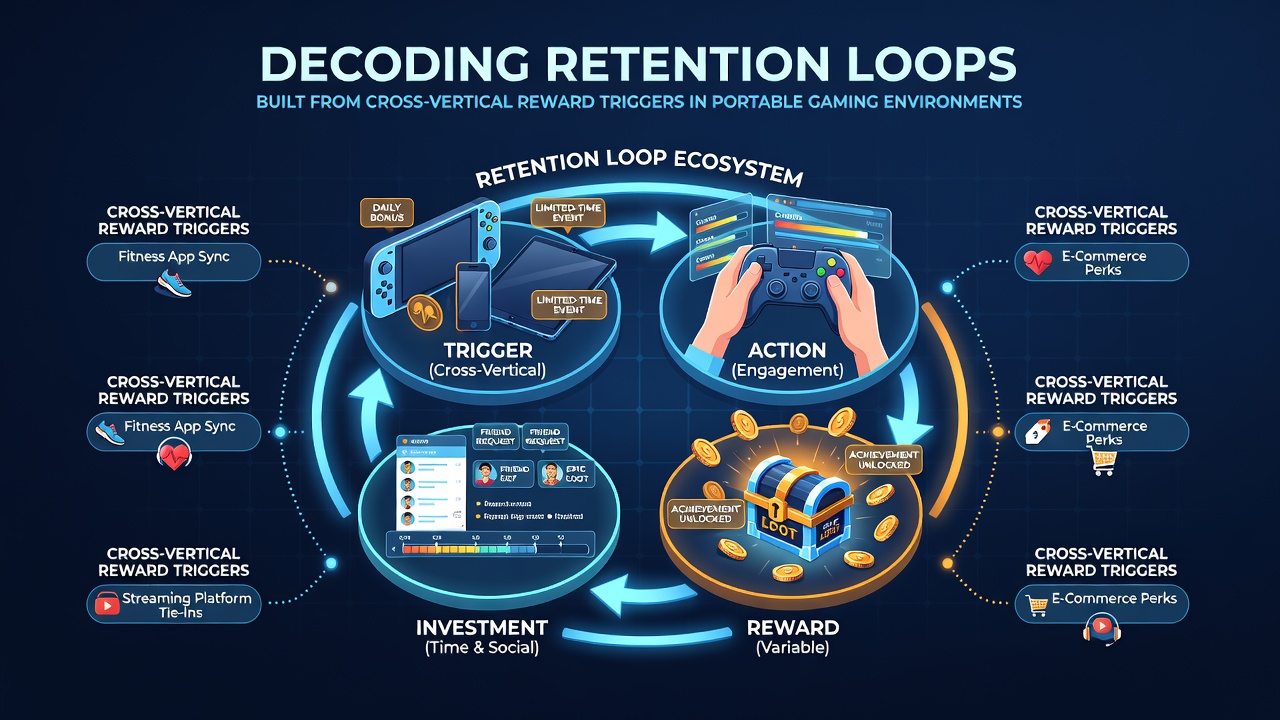
Retention loops form when a player completes a spin on a slot machine and receives a token that unlocks a boosted multiplier during a live dealer session, while that same multiplier then feeds into a sports betting accumulator with adjusted odds, and data from industry reports indicate these chained mechanics increase average session length by measurable percentages across user cohorts. Researchers at academic institutions have tracked how such sequences create feedback cycles because each reward stage resets or elevates the next trigger point rather than concluding the interaction.
Developers design these systems with modular APIs that pull from centralized player profiles, so progress in one vertical automatically populates eligibility markers in others, and this integration prevents isolated play patterns that might otherwise lead to quicker exits. Observers note that portable platforms leverage device notifications to surface the next available trigger, which keeps the loop active even when the app sits in the background.
Technical Implementation in Mobile Frameworks
Engineers build retention loops using event-driven architectures where each user action emits signals that the backend processes in real time, and these signals determine whether a cross-vertical reward activates based on predefined thresholds such as total wager volume or time spent in a particular mode. In August 2026, platform updates introduced refined latency controls that allow simultaneous updates across verticals without interrupting gameplay flow, according to technical documentation from development teams.
Database schemas store reward states as persistent objects tied to user identifiers, which enables seamless handoffs when a player switches from a reel-based game to a table interface or places a bet on live sports events, and this structure supports scalability as user bases expand. Security layers encrypt these state transfers to maintain integrity while complying with regional data standards.
Behavioral Patterns and Loop Reinforcement
Studies conducted by research groups reveal that players who encounter an immediate follow-on reward after an initial vertical interaction show higher return rates within 24 hours compared to those who receive standalone bonuses, and the reinforcement occurs because the loop capitalizes on momentum from the first activity. Portable environments amplify this effect through touch-optimized interfaces that reduce friction during transitions between sections.
One documented case involved a platform that routed slot-derived points directly into a live dealer tip pool option, which then generated betting credits for sports markets, and analysts recorded sustained engagement spikes during peak evening hours. These patterns hold across different device types because the underlying logic remains consistent regardless of screen size or operating system.
Regulatory Context and Measurement Standards
Government agencies such as the Pennsylvania Gaming Control Board track aggregate metrics on player activity that indirectly reflect retention loop effectiveness, while the Victorian Responsible Gambling Foundation publishes periodic findings on engagement durations in regulated markets. Figures from these sources show how interconnected rewards correlate with session metrics without attributing causation to any single design choice.
Measurement protocols emphasize anonymized cohort analysis to evaluate loop performance, and platforms adjust trigger frequencies based on these aggregated insights to align with compliance requirements. In August 2026, updated reporting templates from several oversight bodies began incorporating cross-vertical activity breakdowns to refine industry benchmarks.
Future Adjustments in Loop Design
Developers continue to refine trigger algorithms by incorporating machine learning models that predict optimal reward timing based on historical vertical preferences, and these models process inputs from millions of anonymized sessions to calibrate activation rates. Portable gaming environments benefit from rapid iteration cycles because app store distribution allows targeted updates without full redeployments.
Cross-vertical systems also integrate with loyalty frameworks that accumulate points across categories, creating longer-term loops that span weeks rather than single sessions, and this extension supports sustained platform usage. Data indicates that players who complete full loop cycles demonstrate consistent patterns of re-engagement across subsequent periods.
Conclusion
Retention loops built from cross-vertical reward triggers represent a structural feature of portable gaming environments where interconnected incentives guide player progression across slots, live tables, and sports betting, and ongoing refinements continue to shape how these systems operate within established measurement and compliance frameworks.